Options
Scholar of Islam, Victim of the Holocaust: The Tragic Story of Hedwig Klein
Date
2026
Author(s)

Abstract
Hedwig Klein was a brilliant scholar of Islam whose life and career were tragically cut short by the Holocaust. Born in Antwerp in 1911 and raised in Hamburg, Klein studied at the University of Hamburg under Rudolf Strothmann, Walter Windfuhr, Arthur Schaade, and others from 1931 until 1935. In 1937, she earned the highest possible grades for her oral exams and her doctoral dissertation, an edition of a historical Ibāḍī text. But her dream of an academic career was shattered in 1938 when she was barred from receiving her doctoral degree on account of being Jewish. As the grip of Nazism tightened, Klein’s life took a tragic turn. She secured a visa for India in 1939 and left Hamburg, but her hope of escape was cruelly dashed when her ship was ordered to return to Germany because of the imminent outbreak of World War II. Trapped in Hamburg, Klein found herself without prospects for survival or escape. For a few months in 1941–42, she worked on the Harrassowitz project to compile a dictionary of modern Arabic, but her fate was sealed. On July 11, 1942, Klein was deported to Auschwitz, where she was likely murdered upon arrival. In 1947, five years after her death, she was awarded the doctoral degree she had been denied. On August 10, 1951, she was officially declared dead.
Klein’s story has sparked renewed interest since the early 2000s. This interest has focused on her involvement in the Harrassowitz dictionary project, eventually published as Hans Wehr’s Arabisches Wörterbuch für die Schriftsprache der Gegenwart, and on the dictionary’s alleged connection to efforts to produce an authorized Arabic translation of Hitler’s Mein Kampf.
Drawing on archival material from Germany, Israel, Belgium, the Netherlands, the United Kingdom, the United States, Switzerland, and elsewhere, this study uncovers Klein’s biography, including her family background, her upbringing, and her contribution to scholarship, in order to honor her legacy and address misconceptions about her work. It also reconstructs the early history of Wehr’s dictionary and Klein’s contribution to it in great detail to demonstrate that the dictionary project was unrelated to earlier endeavors to translate Mein Kampf into Arabic.
Klein’s story has sparked renewed interest since the early 2000s. This interest has focused on her involvement in the Harrassowitz dictionary project, eventually published as Hans Wehr’s Arabisches Wörterbuch für die Schriftsprache der Gegenwart, and on the dictionary’s alleged connection to efforts to produce an authorized Arabic translation of Hitler’s Mein Kampf.
Drawing on archival material from Germany, Israel, Belgium, the Netherlands, the United Kingdom, the United States, Switzerland, and elsewhere, this study uncovers Klein’s biography, including her family background, her upbringing, and her contribution to scholarship, in order to honor her legacy and address misconceptions about her work. It also reconstructs the early history of Wehr’s dictionary and Klein’s contribution to it in great detail to demonstrate that the dictionary project was unrelated to earlier endeavors to translate Mein Kampf into Arabic.
Subjects
Description
Sabine Schmidtke, Scholar of Islam, Victim of the Holocaust: The Tragic Story of Hedwig Klein, Berlin: de Gruyter, 2026 (Islamkundliche Untersuchungen, 359)
https://www.degruyterbrill.com/document/isbn/9783111705804/html
https://www.degruyterbrill.com/document/isbn/9783111705804/html
File(s)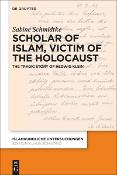
Loading...
Name
Hedwig Klein IU359.jpg
Size
103.92 KB
Format
JPEG
Checksum (MD5)
9cc54e986e11d580a5004c0d0f887908
Loading...
Name
prelims_Schmidtke_2026_Scholar of Islam Victim of the Holocaust.pdf
Size
1.63 MB
Format
Adobe PDF
Checksum (MD5)
5f6036004b28e7221f07f2944dc345c2